
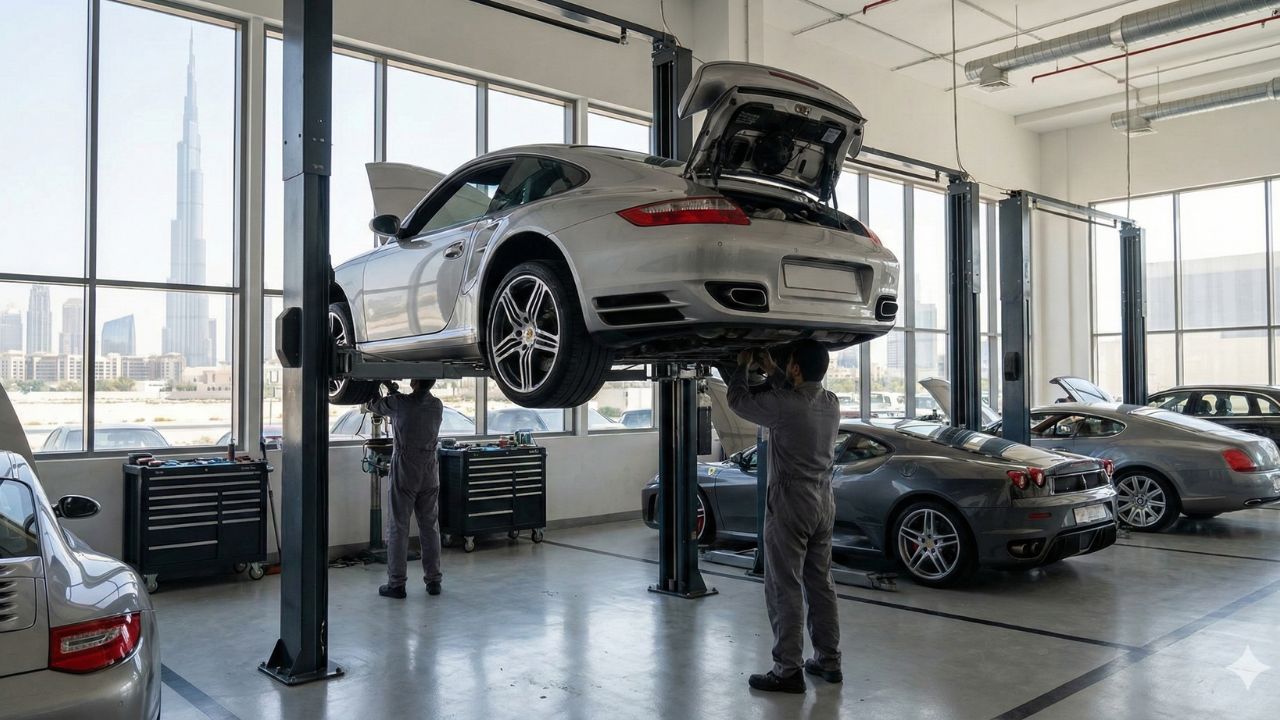
Picture this: You’re threading your Porsche 911 (997) Turbo through the early morning curves leading to Hatta, the twin-turbocharged flat-six singing its mechanical symphony behind you. The 3.6-liter engine delivers its intoxicating blend of precision and brutality that only Stuttgart’s finest engineers could orchestrate. Then, mid-corner, you feel it—a hesitation, a momentary stumble in the power delivery that shouldn’t exist in a machine this meticulously crafted.
Your heart sinks. Not because you doubt the engineering excellence that Porsche poured into this generation between 2006 and 2013, but because you know what comes next: finding someone in Dubai who truly understands what makes your 997 Turbo special.
The Porsche 911 (997) Turbo represents something extraordinary in automotive evolution. Producing between 480 and 530 horsepower depending on whether you’re piloting the standard Turbo or the ferocious Turbo S, this generation marked Porsche’s refinement of forced induction into an art form. The variable turbine geometry system that eliminates lag, the sophisticated all-wheel-drive system that channels power with surgical precision, the PASM active suspension that reads the road like a performance conductor—these aren’t just features. They’re the culmination of decades of motorsport DNA compressed into a daily-drivable masterpiece.
But here’s the uncomfortable truth that many 997 Turbo owners in Dubai discover too late: most repair facilities treat your performance icon like just another car. They see four wheels, an engine, and a transmission. They miss the nuanced engineering that makes your Porsche respond differently, breathe differently, and demand different care than conventional vehicles.
This is where Euro Car Repair fundamentally differs from the landscape of generic garages dotting Dubai’s automotive service sector.
We’ve dedicated ourselves exclusively to European performance and luxury vehicles, with a particular passion for Porsche’s engineering excellence. Our technicians don’t just understand the 997 Turbo’s specifications—they appreciate why Porsche engineered this generation the way they did. They comprehend how Dubai’s merciless climate affects your turbocharged flat-six differently than naturally aspirated engines. They recognize the subtle differences between the 997.1 generation (2006-2009) and the revised 997.2 models (2009-2013) with their direct fuel injection.
Dubai’s supercar ecosystem presents unique challenges that most international repair advice simply cannot address. When was the last time you read maintenance guidance specifically addressing how 50-degree Celsius tarmac temperatures affect your Porsche’s cooling systems? Or how the fine desert sand that infiltrates even the most sealed garages impacts your high-flow intake system? Or why the humidity from our coastal location can wreak havoc on the sophisticated electronic systems that manage your twin-turbo powerplant?
These aren’t theoretical concerns—they’re the daily reality of 997 Turbo ownership in the UAE.
At Euro Car Repair, we’ve spent years developing expertise that bridges the gap between Porsche’s engineering excellence and Dubai’s demanding environment. We understand that your 997 Turbo isn’t just transportation—it’s a carefully calibrated performance instrument that deserves specialists who respect both its capabilities and its complexity.
Throughout this comprehensive guide, we’ll explore exactly why choosing the right repair facility for your Porsche 911 (997) Turbo matters more than you might imagine. We’ll examine the specific services your turbocharged legend requires, the common challenges this generation faces (especially in Dubai’s climate), and why our independent, insurance-free approach actually benefits you as an enthusiast owner.
Whether you’re experiencing concerning symptoms, planning preventive maintenance, or simply want to establish a relationship with technicians who genuinely understand your passion for Porsche’s engineering brilliance, you’ll discover why Dubai’s discerning 997 Turbo community trusts Euro Car Repair with their prized machines.
Why Choose Euro Car Repair for Your Porsche 911 (997) Turbo
Specialized Porsche 997 Turbo Performance Expertise
The difference between competent automotive repair and exceptional Porsche service lies in understanding the philosophy behind the engineering. Anyone can read fault codes and replace components. True expertise means comprehending why Porsche designed the 997 Turbo’s systems the way they did—and how those systems interact under stress.
Our technicians have invested thousands of hours specifically with the 997 generation, studying its evolution from the initial 2006 models through the final 2013 production year. They understand the significance of the DFI (Direct Fuel Injection) system introduced in the 997.2 models and how it fundamentally changed maintenance requirements. They can identify the subtle differences in turbocharger behavior between the VTG (Variable Turbine Geometry) systems across model years.
This specialized knowledge extends beyond technical manuals into real-world application. We’ve diagnosed everything from the peculiar boost control issues that occasionally plague the earlier 997.1 Turbos to the fuel system challenges that can emerge in DFI-equipped 997.2 models. We understand how the sophisticated Porsche Traction Management (PTM) system distributes torque between front and rear axles, and what happens when components within that system begin degrading.
When you bring your 997 Turbo to our facility, the technician examining your vehicle has likely worked on dozens of similar models. They recognize the characteristic symptoms of failing turbocharger wastegate actuators. They know the typical failure patterns of the PASM dampers after years of Dubai’s harsh road conditions. They can differentiate between normal PDK transmission behavior and early warning signs of potential issues.
This depth of experience transforms diagnostic efficiency. Where a general repair shop might spend hours chasing symptoms, our Porsche-focused team often identifies root causes within minutes based on accumulated pattern recognition. That efficiency translates directly into saved time and money for you—but more importantly, it ensures your 997 Turbo receives the precise intervention it needs rather than unnecessary exploratory work.
We’ve also cultivated relationships with specialists in Porsche motorsport applications. Several of our team members actively participate in track day events at Dubai Autodrome and Yas Marina Circuit, driving and maintaining their own performance vehicles. This isn’t just theoretical knowledge—it’s hands-on understanding of how these machines behave under spirited driving conditions.
Advanced Performance Diagnostic Technology
The Porsche 911 (997) Turbo’s electronic architecture represents a quantum leap in automotive sophistication compared to earlier generations. Managing twin turbochargers, all-wheel drive torque distribution, active suspension, advanced traction control, and countless other systems requires a network of sensors, actuators, and control modules that communicate through multiple data buses.
Diagnosing issues within this complex ecosystem demands equipment specifically designed for Porsche’s proprietary systems. We’ve invested in professional-grade Porsche diagnostic platforms that communicate at the same depth as factory tools. This includes access to the complete range of control modules, not just the basic engine and transmission systems that generic OBD-II scanners can reach.
Our diagnostic capability extends into the subtleties that separate accurate diagnosis from guesswork. We can monitor real-time boost pressure from both turbochargers independently, watching for the discrepancies that indicate developing wastegate issues. We track fuel pressure dynamics in direct-injection systems with millisecond precision, identifying the patterns that predict injector failures before they become catastrophic. We analyze PASM suspension response rates, catching damper degradation long before it becomes obvious during driving.
Consider the difference this makes in practical terms. A generic shop scanning your 997 Turbo might see a fault code for “boost pressure deviation.” Armed with basic tools, they’re essentially guessing about root causes. Is it a faulty wastegate actuator? Vacuum leak? Failing boost pressure sensor? Clogged intercooler? Turbocharger bearing wear? Each of these failures produces similar symptoms but requires completely different repair approaches.
Our advanced diagnostic equipment lets us interrogate the system far deeper. We can command specific boost levels and monitor how the turbos respond. We can test wastegate actuator movement through its full range. We can compare actual pressure readings across multiple sensors simultaneously. This granular data transforms diagnosis from educated guessing into surgical precision.
We’ve solved diagnostic mysteries that stumped other facilities precisely because we can see deeper into your Porsche’s systems. Recently, a customer arrived after two other shops diagnosed his 997 Turbo as needing new turbochargers—a repair approaching 20,000 dirhams. Our detailed diagnostics revealed a failed boost control solenoid valve, a component costing a fraction of twin turbos. The difference wasn’t that their technicians were incompetent—they simply lacked the tools to see what we could see.
Genuine Porsche Parts and Performance Alternatives
Parts quality directly determines your 997 Turbo’s longevity and performance reliability. We’ve witnessed too many enthusiasts learn this lesson through expensive failures after choosing substandard replacement components based purely on price.
Our parts philosophy balances three critical factors: authenticity, quality, and value. For crucial performance and safety systems, we source genuine Porsche OEM components through established supply networks. Your turbochargers, engine internals, brake components, and critical sensors receive nothing but factory-specification parts that meet Porsche’s engineering standards.
Understanding that some OEM parts carry premium pricing, we’ve also identified exceptional aftermarket manufacturers whose products match or exceed original specifications. Brands like Mahle for pistons, Sachs for suspension components, and Bosch for electrical systems often supply parts to Porsche’s production lines before offering identical components through aftermarket channels at reduced prices.
We’re completely transparent about this distinction. Before ordering any component, we’ll explain whether we’re recommending OEM or premium aftermarket, why we’ve made that recommendation for your specific repair, and what cost difference you’re looking at. For many routine maintenance items—filters, fluids, wear components—exceptional alternatives exist at sensible prices. For critical performance systems, we won’t compromise your 997 Turbo’s integrity to save a few hundred dirhams.
Every part we install comes with our quality guarantee. OEM components carry Porsche’s warranty protection. Premium aftermarket parts include manufacturer warranties that we’ll support directly. If any component we’ve installed fails prematurely due to manufacturing defects, we’ll replace it without charging you twice for labor.
We also maintain relationships with performance parts suppliers for enthusiasts seeking upgrades. Whether you’re interested in sport exhaust systems, enhanced intercoolers for better heat management in Dubai’s climate, or suspension modifications for track use, we can source and properly install upgrades that complement rather than compromise your Porsche’s engineering.
Transparent Pricing Philosophy for Performance Cars
Porsche repair pricing in Dubai spans an enormous range, from suspiciously cheap services that raise quality concerns to dealership rates that can induce sticker shock. We’ve positioned ourselves deliberately in the middle ground—delivering dealership-quality expertise and parts at independent shop pricing.
Our pricing philosophy starts with detailed estimation before any work begins. When you describe symptoms or request service, we’ll provide a comprehensive cost breakdown covering parts, labor, and any consumables required. No hidden fees appear on your final invoice that weren’t discussed upfront. No surprise charges emerge because we “discovered additional issues” without consulting you first.
Compared to official Porsche dealerships in Dubai, our clients typically save between 30 and 40 percent on equivalent repairs while receiving the same quality parts and specialized expertise. This cost difference isn’t achieved through shortcuts—it reflects our lower overhead, direct parts sourcing, and efficiency gained through specialization.
We’ll gladly discuss pricing before commitment. If you’re facing major service—perhaps a PDK transmission service or turbocharger replacement—we’ll break down exactly where costs occur. You’ll understand the parts pricing, how many labor hours we’re estimating, and why certain procedures demand the time they require. This transparency helps you make informed decisions about your 997 Turbo’s care.
For routine maintenance, we offer packaged service programs that bundle related procedures at better value than individual services. Our annual inspection packages, designed specifically for Porsche performance models in Dubai’s environment, provide comprehensive evaluation and basic maintenance at structured pricing that removes guesswork from budgeting your ownership costs.
Enthusiast-First Service Model
We recognize that 997 Turbo ownership transcends mere transportation. Your Porsche represents passion for engineering excellence, appreciation for motorsport heritage, and the visceral experience of performance driving. That understanding shapes every interaction with our team.
From your initial contact, you’ll notice the difference. Our service advisors speak enthusiast language. They understand the difference between a standard 997 Turbo and Turbo S. They appreciate why you’re concerned about maintaining optimal boost response. They won’t dismiss your observations about subtle changes in behavior because they recognize that you know your car better than anyone.
Throughout the repair process, we maintain clear communication. You’ll receive updates when we begin diagnosis, when we identify issues, before we order parts, and when work is completed. For complex repairs, we’ll show you the failed components and explain exactly what occurred. For mysterious issues, we’ll walk you through our diagnostic logic so you understand how we arrived at our conclusions.
We also respect your schedule and priorities. Track day approaching? We’ll prioritize getting your 997 Turbo ready with appropriate preparation and safety inspection. Planning a weekend drive to Fujairah? We’ll ensure you have confidence in your Porsche’s reliability. Need extended service for major work but depend on transportation? We’ll discuss loaner options or timing that minimizes disruption.
Building long-term relationships matters more to us than maximizing revenue from individual transactions. We want to become your trusted partner in 997 Turbo ownership, the team you contact first when questions arise, the facility you recommend confidently to fellow Porsche enthusiasts. That relationship-focused approach influences our recommendations—we’ll suggest preventive maintenance that saves you money long-term, even if it means less frequent visits.
Why We Don’t Work With Insurance Companies
Our decision to operate independently from insurance company networks often surprises new clients, but enthusiast owners quickly recognize the benefits this independence provides.
Insurance company relationships fundamentally change repair shop incentives in ways that don’t serve performance vehicle owners well. Shops dependent on insurance referrals face pressure to use cheaper parts, minimize labor hours, and prioritize insurance company satisfaction over owner satisfaction. They’re also locked into insurance-negotiated rates that often don’t reflect the specialized expertise and equipment that proper Porsche service demands.
By declining insurance work, we maintain complete independence in our repair recommendations. When your 997 Turbo needs service, our advice focuses purely on what’s best for your vehicle’s performance, longevity, and reliability—not what an insurance adjuster prefers or what fits within predetermined allowances.
This independence translates into better parts quality. We’re never pressured to substitute aftermarket components of questionable origin because they’re less expensive. We’ll never compromise on fluids, using whatever meets Porsche’s specifications rather than generic alternatives that insurance companies favor for cost savings.
The speed advantage matters enormously. Insurance-based repairs often involve days waiting for adjuster inspections, approvals for diagnostic time, authorization for specific parts, and supplemental estimates when initial assessments prove incomplete. We bypass this entire bureaucratic nightmare. When you authorize repair, work begins immediately. Parts get ordered without waiting for insurance approval. Your 997 Turbo returns to action days or weeks faster than insurance-constrained timelines allow.
For performance vehicle owners who value their cars beyond mere financial value, direct payment actually improves the service relationship. You’re not just another claim number in an insurance company’s system—you’re a valued client whose satisfaction determines our reputation. That accountability drives excellence in ways that insurance relationships simply cannot replicate.
We understand this means paying directly for repairs, but many enthusiasts find the trade-off worthwhile. Better parts, expert service, faster turnaround, and repair approaches focused on quality rather than cost containment deliver value that exceeds simple price comparison.
Proven Track Record in Dubai’s Porsche Community
Euro Car Repair’s reputation within Dubai’s Porsche community didn’t emerge overnight—it’s been cultivated through years of consistent excellence and genuine passion for these magnificent machines.
We’ve had the privilege of maintaining 997 Turbos for clients ranging from weekend enthusiasts to serious track day competitors. Our work has prepared these cars for spirited drives through the Hajar Mountains, competitive events at Dubai Autodrome, and daily commuting through Dubai’s demanding traffic conditions. Each application demands slightly different service approaches, and we’ve developed expertise across the entire spectrum.
Word-of-mouth referrals constitute the majority of our new Porsche clients. Enthusiasts recommend us to fellow owners they meet at cars and coffee gatherings, track day paddocks, and online Porsche communities. That organic growth reflects something no advertising can create: genuine trust from passionate owners who stake their automotive pride on our expertise.
Our repeat customer rate among Porsche owners exceeds 90 percent. Once clients experience our specialized approach, they rarely consider returning to previous service relationships. Many have been with us for years, trusting us with everything from routine oil changes to major component replacements, performance upgrades, and pre-purchase inspections on additional Porsches they’re considering.
We’ve also become actively involved in Dubai’s broader enthusiast community. Our team members participate in Cars and Coffee UAE events, track days at Dubai Autodrome, and informal gatherings of Porsche owners throughout the emirate. This involvement isn’t marketing—it’s genuine enthusiasm for the culture surrounding these remarkable machines.
Comprehensive Porsche 911 (997) Turbo Service Offerings
Engine Repair and Performance Maintenance
The heart of your 997 Turbo deserves nothing less than reverent expertise. Porsche’s 3.6-liter twin-turbocharged flat-six represents the pinnacle of forced induction engineering from this era, producing power figures that embarrassed supercars costing twice as much while maintaining surprising daily drivability.
Understanding this engine’s architecture starts with appreciating its horizontally-opposed configuration. Unlike conventional inline or V-configuration engines, the flat-six’s cylinder arrangement creates unique maintenance access challenges and specific failure patterns. The engine’s placement behind the rear axle, combined with the turbocharger installation, means seemingly simple procedures can demand hours of component removal just to reach the service area.
We’ve developed efficient procedures for accessing critical engine components without unnecessary teardown. Our experience with dozens of 997 Turbos taught us the optimal approaches for valve cover removal, spark plug replacement, and accessory component service that minimize labor hours while ensuring proper procedures.
Oil system maintenance forms the foundation of engine longevity. These turbocharged flat-sixes demand exceptional lubrication both for the engine internals and the turbocharger bearings spinning at enormous speeds. We use only Porsche-approved synthetic oils meeting the specific viscosity grades these engines require—typically 0W-40 for Dubai’s climate, providing cold-start protection while maintaining film strength under extreme operating temperatures.
Oil change intervals for turbocharged engines in Dubai’s harsh environment should be more conservative than Porsche’s international recommendations suggest. While the factory service manual might indicate 12,000-kilometer intervals under ideal conditions, Dubai’s extreme heat, dust ingestion, and traffic patterns classify as “severe service” conditions. We typically recommend 7,500 to 8,000-kilometer intervals to ensure optimal protection for both engine internals and turbocharger bearings.
The cooling system demands particular attention in our climate. Your 997 Turbo employs multiple radiators—engine cooling, transmission cooling, charge air cooling—all working overtime in 50-degree summer temperatures. We inspect coolant condition, pressure test the system for leaks, and verify proper thermostat operation. Coolant degradation happens faster in extreme heat, and even minor leaks that would be inconsequential in moderate climates can cause overheating drama when ambient temperatures hit their peak.
Turbocharger health monitoring represents one of our specialized capabilities. The VTG turbos in your 997 Turbo are sophisticated pieces of equipment with variable vanes that adjust to optimize boost across the rev range. These mechanisms can develop carbon buildup affecting vane movement, or the actuators controlling vane position can fail. We can test turbocharger response through diagnostic procedures, identifying developing issues before complete failure occurs.
For engines showing oil consumption beyond normal ranges (Porsche considers up to one liter per thousand kilometers “acceptable,” though most healthy 997 engines consume far less), we can perform compression and leak-down testing to isolate whether cylinder wear, valve sealing, or piston ring issues exist. Understanding the root cause guides appropriate repair recommendations rather than guessing about internal engine condition.
Direct Fuel Injection systems in 997.2 models (2009-2013) introduced both performance benefits and new maintenance considerations. DFI provides more precise fuel control and better power output but can develop carbon buildup on intake valves since fuel no longer washes over them. We offer intake valve cleaning services using walnut shell blasting—a gentle abrasive process that removes carbon without damaging valve surfaces—maintaining optimal engine breathing and performance.
Common oil leak points in these engines include valve cover gaskets, intermediate shaft bearing seals, and rear main seals. We can identify leak sources accurately and address them with proper gasket materials and installation procedures. Many oil leaks that appear catastrophic when you notice drips under your Porsche actually originate from relatively minor seal failures that can be addressed before they become major problems.
Transmission and PDK Gearbox Services
The transmission options in 997 Turbos reflect Porsche’s commitment to driver choice—six-speed manual for purists or the revolutionary PDK dual-clutch system for those seeking lightning-quick shifts without sacrificing driver control.
Manual transmission maintenance centers around fluid quality and clutch condition. Porsche’s six-speed manual in the 997 Turbo is renowned for precision and durability, but it demands proper care. We use Porsche-specification transmission fluid changed at appropriate intervals (typically every 40,000 to 50,000 kilometers) to maintain smooth shifting and gear synchronizer longevity.
Clutch replacement in manual 997 Turbos represents a significant service but becomes necessary as mileage accumulates or if the car has seen aggressive driving. We can assess clutch condition through several diagnostic approaches before recommending replacement, ensuring you’re not replacing a clutch prematurely. When replacement becomes necessary, we install quality clutch kits with proper installation procedures including flywheel resurfacing or replacement as conditions dictate.
The PDK dual-clutch transmission represents a more complex system demanding specialized service. This remarkable gearbox uses two independent clutches—one for odd-numbered gears, one for even-numbered gears—enabling seamless shifts by pre-selecting the next gear before disengaging the current one. The result feels almost like magic: power never interrupts during upshifts, and the transmission responds to paddle commands in milliseconds.
PDK fluid service follows a specific procedure that generic shops often perform incorrectly. The system requires precise fluid capacity, proper temperature during service, and specific bleeding procedures to eliminate air from the hydraulic controls. We’ve invested in the equipment and training to service PDK transmissions according to Porsche specifications, ensuring optimal shift quality and long-term reliability.
We recommend PDK fluid service every 60,000 kilometers or four years, whichever arrives first. Dubai’s extreme heat accelerates fluid degradation, and the clutch packs operating in this fluid generate significant heat during use. Fresh fluid maintains proper clutch pack engagement, cooling efficiency, and hydraulic control system protection.
For PDK transmissions exhibiting shifting hesitation, rough engagement, or unusual behavior, we can perform detailed diagnostics that analyze clutch pack wear, hydraulic pressure generation, and electronic control system operation. Many PDK issues that initially appear mechanical actually stem from sensor failures or electronic control problems that are far less expensive to address than transmission rebuilds.
The all-wheel-drive system connecting your transmission to all four wheels includes transfer case components and viscous coupling mechanisms that also require periodic fluid service. These systems typically receive less attention than they deserve, but fluid degradation here can lead to increased component wear and eventual costly failures. We include transfer case and differential service in our comprehensive maintenance programs.
High-Performance Brake System Services
Your 997 Turbo’s braking system stands as a testament to Porsche’s motorsport heritage and engineering philosophy. Whether equipped with massive steel rotors or the optional Porsche Ceramic Composite Brake (PCCB) system, your Porsche can decelerate with the same intensity it accelerates.
Standard brake systems on 997 Turbos use six-piston front calipers and four-piston rears clamping 350mm front and 350mm rear ventilated rotors. The sheer size and sophistication of this system exceeds most sports cars’ capabilities, but it’s the minimum Porsche considered acceptable for a vehicle with 480-plus horsepower.
Brake pad replacement intervals vary dramatically based on driving style. Gentle street driving might see pads lasting 40,000 kilometers or more. Enthusiastic mountain driving or occasional track use can consume pads in half that distance. We inspect pad thickness during routine services and provide advance warning when replacement approaches rather than waiting until wear indicators start grinding against rotors.
Rotor condition assessment requires expertise beyond measuring remaining thickness. We evaluate rotor surfaces for heat checking (the network of fine cracks that appears after extreme thermal cycling), scoring from worn pads, and warping that causes brake pulsation. Many rotors that other shops would replace based solely on thickness measurements still have substantial service life remaining when surface condition is good.
For PCCB-equipped 997 Turbos, maintenance becomes more specialized. Ceramic composite rotors are phenomenally expensive but can last the vehicle’s lifetime under normal conditions. The pads, however, wear relatively quickly and cost significantly more than standard steel brake pads. We stock PCCB-compatible pads and can service these systems according to Porsche’s specific procedures.
Brake fluid service often receives less attention than it deserves, particularly in Dubai’s extreme climate. Brake fluid absorbs moisture over time, reducing its boiling point and potentially leading to brake fade under hard use. In our environment, moisture absorption happens faster than in temperate climates. We recommend brake fluid exchange every two years using DOT 4 fluid meeting Porsche specifications.
For clients who participate in track days, we offer pre-event brake system inspection and preparation. This includes thorough pad and rotor assessment, brake fluid exchange with high-performance fluid options, and evaluation of brake cooling systems. We can also recommend pad compounds better suited to track use than street-focused pads your Porsche might currently wear.
Post-track inspection catches any issues before they become problems during street driving. Track use subjects brakes to thermal loads far exceeding normal operation, sometimes revealing developing weaknesses in components that seemed fine during regular driving.
Air Conditioning and Climate Control Systems
Air conditioning in Dubai isn’t luxury—it’s essential equipment that preserves both comfort and sanity during our merciless summers. Your 997 Turbo’s climate control system battles extraordinary challenges in our environment, working overtime to maintain interior comfort when exterior temperatures exceed 50 degrees Celsius.
Porsche’s climate control system in the 997 Turbo balances cooling power with efficiency, using automatic temperature regulation to maintain set conditions. When functioning properly, the system delivers icy air even on the hottest days. When problems emerge, the difference becomes uncomfortable very quickly.
We start every AC service with comprehensive diagnostics. Refrigerant level alone tells an incomplete story—we need to know system pressures on both high and low sides, compressor engagement behavior, evaporator temperature, and condenser efficiency. These parameters reveal whether you’re dealing with simple refrigerant loss, component failures, or more complex system issues.
Compressor health determines system performance more than any other single component. These units work incredibly hard in our climate, cycling continuously during summer driving. We can assess compressor condition through pressure testing and audible evaluation, catching developing failures before complete breakdown occurs.
Refrigerant leaks plague many older 997s, particularly those that have spent years in Dubai’s harsh conditions. UV dye injection and specialized leak detection equipment help us locate even tiny leaks in condenser coils, evaporator cores, or hose connections. Finding and repairing leaks properly prevents the recurring refrigerant top-ups that waste money without addressing root causes.
Condenser replacement represents a common repair in Dubai. Located in front of the radiator, the condenser suffers rock impact damage and corrosion from road chemicals. A damaged condenser might still provide some cooling but operates inefficiently and typically leaks refrigerant gradually. We can determine whether condenser replacement is necessary or if other issues are masquerading as condenser problems.
Evaporator cores located inside the dashboard rarely fail in younger vehicles but can develop leaks or blockages as vehicles age. Evaporator replacement represents major service since accessing the component requires extensive dashboard disassembly. We perform this service when necessary but ensure proper diagnosis before recommending such invasive work.
Cabin air filter maintenance matters more in Dubai than most climates. Our fine desert dust clogs filters quickly, restricting airflow and reducing cooling efficiency. We recommend filter replacement every 10,000 to 15,000 kilometers rather than following longer international service intervals. Fresh filters maintain optimal airflow and improve interior air quality.
For maximum cooling performance during brutal summer months, we can verify that all cooling system components operate at peak efficiency—fans spinning at correct speeds, temperature sensors reading accurately, and control modules commanding appropriate compressor operation.
Suspension and Chassis Services
Your 997 Turbo’s suspension represents a delicate balance between sports car handling precision and daily drivability. Whether equipped with standard suspension or the optional PASM (Porsche Active Suspension Management) system, your Porsche delivers handling characteristics that embarrass vehicles costing far more.
PASM-equipped vehicles use electronically controlled dampers that adjust firmness based on driving mode and road conditions. This sophisticated system provides comfort during cruising while delivering track-worthy control when driving demands it. The system’s complexity, however, introduces potential failure points that standard suspension doesn’t face.
PASM dampers can fail electronically or mechanically. Electronic failures might trigger dashboard warnings and revert the system to a fixed damping rate. Mechanical failures—typically fluid leaks from worn seals—manifest as gradual deterioration in ride quality and handling precision. We can diagnose PASM failures accurately and replace failed dampers with quality components restoring proper system function.
Standard suspension, while less complex, still demands periodic attention. Shock absorber degradation happens gradually, often so slowly that drivers don’t notice the deterioration in handling response and ride control. We evaluate shock absorber condition through several tests, identifying worn units before they compromise your driving experience or tire wear patterns.
Control arm bushings represent common wear items in Dubai’s environment. The combination of rough roads, speed bumps, and extreme temperature cycling accelerates bushing deterioration. Worn bushings introduce looseness in suspension geometry, affecting both handling precision and tire wear. We can identify worn bushings during inspection and replace them with quality components that restore tight suspension feel.
Ball joints and tie rod ends also wear with accumulated mileage and harsh use. These components are critical to both handling and safety—failure while driving could be catastrophic. We inspect these components thoroughly during service and recommend replacement when wear exceeds safe limits rather than waiting for failure.
Wheel alignment on 997 Turbos demands precision and understanding of the suspension geometry Porsche engineered for this chassis. The rear-engine configuration and sophisticated multi-link suspension design use specific alignment specifications that optimize tire contact patch during cornering while maintaining stable straight-line tracking. We have the equipment and expertise to set alignment precisely to Porsche specifications or, for track-focused enthusiasts, to performance alignment settings that prioritize ultimate grip over tire longevity.
For clients lowering their 997 Turbos or installing aftermarket suspension components, we can assist with proper installation and alignment setup. We understand the handling compromises and benefits different approaches offer and can guide decisions based on intended use.
Steering system maintenance includes inspecting the rack-and-pinion unit, power steering pump (or electric power steering system in later 997.2 models), and hydraulic lines. Power steering fluid should be inspected regularly and changed when contamination or degradation appears. The steering system’s precision and feedback define much of the 997 Turbo’s driver engagement—maintaining it properly preserves this essential character.
Electrical and Electronic System Diagnostics
Modern Porsches integrate electronics into every aspect of vehicle operation, and the 997 Turbo exemplifies this integration. Dozens of control modules communicate through multiple data networks, managing everything from engine performance to lighting to infotainment.
Battery health forms the foundation of reliable electrical system operation. These sophisticated vehicles demand consistent voltage supply, and weak batteries cause seemingly unrelated electrical issues. We test battery condition comprehensively—not just static voltage but load testing and internal resistance measurement that predict remaining service life accurately.
Battery replacement in 997 Turbos requires more than simple installation. The vehicle’s electrical system must be properly initialized to recognize the new battery, and certain control modules require coding procedures to reset learned parameters. We perform these procedures correctly, ensuring all vehicle systems recognize and work optimally with the fresh battery.
Alternator testing goes beyond checking if it’s charging—we verify proper voltage regulation, current output capacity, and electrical noise characteristics. Failing alternators might still charge adequately under light loads while struggling during high electrical demand, leading to mysterious electrical gremlins that appear intermittently.
Sensor failures manifest in countless ways throughout the 997 Turbo. Engine sensors affecting fuel delivery, ignition timing, or boost control can cause drivability issues, check engine lights, and reduced performance. Suspension sensors for PASM systems might trigger warning lights or force the system into limp mode. Wheel speed sensors affect both ABS function and all-wheel-drive torque distribution.
We approach sensor diagnosis logically, using diagnostic equipment to differentiate between actual sensor failures and wiring issues or control module problems that might erroneously implicate sensors. Replacing sensors that aren’t actually failed wastes money and leaves the real problem unsolved.
Module failures occasionally occur in aging 997s. Electronic control units managing engine functions, transmission operation, body systems, or infotainment can develop internal faults requiring replacement or, in some cases, repair. We can diagnose module failures accurately and source replacement units programmed correctly for your specific vehicle.
Wiring harness issues develop in vehicles exposed to Dubai’s harsh conditions. Extreme heat degrades insulation, humidity corrodes connections, and rodents occasionally cause damage in parked vehicles. We can trace wiring problems to their source using circuit testing equipment and repair damaged harnesses properly.
For mysterious intermittent electrical issues that plague many aging vehicles, our diagnostic approach combines technical expertise with systematic troubleshooting. We document symptoms thoroughly, attempt to replicate failures, and methodically test suspected circuits until root causes reveal themselves.
Performance Exhaust and Emission Systems
Your 997 Turbo’s exhaust system channels explosive energy from the twin-turbocharged flat-six while managing emissions and sound character. The factory exhaust balances these competing demands admirably, but enthusiasts often seek alternatives that enhance the acoustic experience.
The catalytic converters in your Porsche serve critical emissions control functions while also supporting turbocharger efficiency. These components typically provide long service life but can fail from age, contamination, or physical damage. Failed catalytic converters trigger check engine lights, reduce power output, and can cause overheating issues.
We can diagnose catalytic converter condition through exhaust gas analysis, backpressure testing, and visual inspection. When replacement becomes necessary, we install quality converters that meet emissions requirements while maintaining optimal exhaust flow for turbocharged performance.
The factory exhaust system includes sophisticated valving in later 997 models that adjusts sound character based on driving mode. Sport mode opens valves for more aggressive sound, while normal mode keeps valves closed for quieter operation. These valve systems occasionally fail, stuck open or closed, affecting both sound and potentially backpressure characteristics.
For enthusiasts seeking enhanced sound, we can discuss aftermarket exhaust options that range from subtle improvements to race-inspired systems. Our experience with various brands and configurations helps guide selections that match your preferences while avoiding drone, excessive volume, or emissions compliance issues.
Exhaust system mounting and hangers should be inspected periodically. Failed hangers allow the exhaust system to shift position, potentially causing rattles, contact with underbody components, or stress cracks in exhaust piping. Proper support maintains system alignment and longevity.
Turbocharger-to-exhaust connections experience extreme thermal cycling and can develop leaks. These leaks might affect turbocharger efficiency and definitely impact sound character—turbocharged engines with exhaust leaks near the turbo sound harsh and unpleasant. We can identify and seal exhaust leaks properly, restoring both performance and acceptable sound quality.
Additional Specialized Services
Beyond major system repairs, we offer comprehensive services supporting total 997 Turbo ownership.
Tire replacement with TPMS programming represents a routine but technical service. Your Porsche uses tire pressure monitoring sensors in each wheel that must be properly initialized after tire changes. We stock performance tires appropriate for Dubai’s climate and can advise on tire selections balancing dry grip, wet performance, and heat resistance for our operating conditions.
Wheel alignment after tire installation or suspension service ensures optimal tire wear and handling characteristics. We use precision alignment equipment and can set your 997 Turbo to factory specifications or performance-oriented settings based on your preferences.
Pre-purchase inspection services help prospective 997 Turbo buyers make informed decisions. Our comprehensive inspection evaluates mechanical condition, identifies existing or developing issues, and provides realistic assessment of future maintenance needs. Many clients have avoided purchasing problem vehicles based on our pre-purchase findings—or negotiated better prices based on identified issues.
Track day preparation services ensure your 997 Turbo is ready for spirited driving. We perform safety inspections checking brake condition, fluid levels, tire condition, and suspension integrity. We can adjust tire pressures for track use, verify cooling system capacity, and confirm all performance systems operate correctly.
Post-track inspection catches any issues track use might have revealed or caused. Hard driving sometimes exposes developing weaknesses that never appear during street driving. Catching these issues promptly prevents them from becoming bigger problems.
Scheduled maintenance packages bundle regular services at better value than individual appointments. Our packages designed specifically for 997 Turbos in Dubai’s environment include all necessary inspections, fluid services, and filter replacements at appropriate intervals.
Paint protection film and ceramic coating installations protect your Porsche’s finish from Dubai’s harsh conditions—rock chips, sand blasting, UV degradation, and harsh cleaning. We partner with premium installation facilities and can coordinate these services seamlessly with mechanical work.
Common Porsche 911 (997) Turbo Problems We Solve
Turbocharger Wastegate Rattle and Failure
One of the most discussed issues among 997 Turbo owners manifests as a distinctive rattling sound during light throttle or deceleration. This noise originates from wear in the wastegate actuator mechanisms controlling boost pressure. The variable turbine geometry system uses complex mechanical linkages that can develop play over time, creating the characteristic rattle.
While often more annoying than immediately harmful, this condition indicates deteriorating components that will eventually require attention. Left unaddressed, the wastegate mechanisms can fail completely, causing boost control problems ranging from insufficient boost to dangerous overboost conditions.
We diagnose this issue by inspecting the wastegate actuator linkages for excessive play and testing actuator response through commanded movements using diagnostic equipment. When replacement becomes necessary, we install revised components addressing the root causes of the original design’s wear patterns.
Prevention involves regular inspection during service intervals, catching developing play before complete failure occurs. Some owners operate successfully with minor wastegate noise for extended periods, but monitoring the condition ensures it doesn’t progress to actual boost control failure.
Direct Fuel Injection Carbon Buildup (997.2 Models)
The 997.2 generation introduced direct fuel injection, providing performance and efficiency benefits but also creating a maintenance challenge previous generations didn’t face. Unlike port fuel injection that washes intake valves with gasoline containing detergents, DFI sprays fuel directly into combustion chambers. The intake valves receive no cleaning from fuel contact and gradually accumulate carbon deposits from crankcase vapors.
This carbon buildup manifests as rough idling, hesitation during acceleration, reduced power output, and increased fuel consumption. The onset happens gradually over tens of thousands of kilometers, often so slowly that owners don’t notice the deterioration until it becomes substantial.
We address this issue through intake manifold removal and walnut shell blasting of intake valves. This gentle abrasive process removes carbon deposits without damaging valve surfaces or sealing faces. The procedure typically restores smooth idle, crisp throttle response, and optimal power delivery.
Prevention involves catch can installation that intercepts oil vapors before they reach the intake manifold, dramatically reducing carbon accumulation rates. We can install quality catch can systems and provide guidance on maintenance intervals for emptying collected oil.
Coolant Expansion Tank Cracking
A surprisingly common failure point in 997 Turbos involves the plastic coolant expansion tank developing cracks and leaking. The combination of thermal cycling, pressure fluctuation, and material degradation from extended exposure to hot coolant causes the plastic to become brittle over time.
Symptoms often start subtly—minor coolant smell after hot operation, slight level drops requiring periodic top-ups, or visible moisture around the expansion tank. Left unaddressed, cracks can propagate until catastrophic failure occurs, dumping the entire cooling system contents and potentially causing overheating damage.
We replace failed expansion tanks with updated components and thoroughly inspect the entire cooling system for related issues. Since this failure typically occurs in vehicles with substantial age and mileage, we often recommend comprehensively addressing cooling system wear items simultaneously—hoses showing deterioration, radiator condition assessment, and thermostat replacement if age warrants.
Prevention involves regular coolant system inspection during service intervals, catching early crack formation before major leaks develop. The expansion tank is relatively inexpensive and easy to replace, making preventive replacement at high mileage a reasonable approach for avoiding inconvenient roadside failures.
PDK Mechatronic Unit Failures
The PDK transmission’s sophisticated control system relies on an integrated mechatronic unit combining hydraulic valves, electronic controls, and sensors in a single assembly. This complex component occasionally develops failures manifesting as harsh shifting, delayed engagement, stuck gears, or complete transmission malfunction.
Mechatronic failures often announce themselves through transmission warning lights and error codes stored in the control module. Our diagnostic equipment can interrogate the mechatronic unit, identifying specific circuit or valve failures within the assembly.
Repair options vary depending on the specific failure mode. Some mechatronic issues respond to replacement of individual components or valve body cleaning. Other failures require complete mechatronic unit replacement—an expensive repair but less costly than transmission replacement.
We can distinguish between mechatronic failures and other transmission issues that might produce similar symptoms. Many PDK problems blamed on mechatronic units actually stem from worn clutch packs, failed sensors external to the mechatronic assembly, or simple fluid condition issues. Accurate diagnosis prevents unnecessary mechatronic replacement.
Prevention centers on proper PDK fluid service at recommended intervals and avoiding extreme abuse patterns that overheat transmission fluid and accelerate component wear.
Air-Oil Separator Failures
The air-oil separator forms a critical part of the crankcase ventilation system, removing oil vapors from air before routing them back into the intake system. Failures typically manifest as excessive oil consumption, blue smoke from the exhaust, oil coating on intake components, or rough idle.
This component sits behind the engine in the 997 Turbo, making replacement labor-intensive despite the part itself being relatively affordable. Access requires removing multiple components, and proper installation demands careful attention to hose routing and connections.
We’ve developed efficient procedures for air-oil separator replacement, minimizing labor hours while ensuring proper installation. We also inspect related components during this service—PCV valves, connecting hoses, and intake system condition—addressing the entire crankcase ventilation system comprehensively.
Prevention involves monitoring oil consumption patterns and investigating increases before excessive consumption occurs. Catching air-oil separator failure early minimizes oil contamination of intake components and catalytic converters.
Rear Main Seal Leaks
The seal preventing oil leakage between the engine and transmission occasionally develops leaks in higher-mileage 997 Turbos. This seal endures constant exposure to hot oil, rotational friction from the flywheel or flexplate, and thermal cycling that eventually degrades the seal material.
Rear main seal leaks typically appear as oil accumulation on the underside of the transmission bell housing or drips beneath the engine-transmission junction. Initial leaks often remain minor for extended periods before progressing to more substantial oil loss.
Repair requires transmission removal to access the rear main seal—making this a labor-intensive service even though the seal itself costs minimal amounts. During transmission removal, we inspect clutch condition in manual cars or flexplate condition in PDK-equipped vehicles, potentially addressing multiple items during a single major service.
We evaluate rear main seal leak severity before recommending immediate repair. Minor seepage that leaves light residue but doesn’t drip aggressively might be monitored initially, deferring expensive repair until more convenient timing. Active leaking that creates drips or spots on garage floors warrants prompt attention to prevent progressive oil loss.
PASM Suspension System Failures
The electronically controlled PASM dampers occasionally fail, either through mechanical breakdown of the damper internals or electronic failure of the control solenoids and position sensors. Symptoms include dashboard warning lights, suspension stuck in one mode (usually defaulting to firmer settings), unusual ride quality changes, or fluid leaks from the damper bodies.
PASM failures require damper replacement with properly functioning units. We source quality replacement dampers and perform the coding procedures required for the control system to recognize new components correctly. Improper coding can leave warning lights illuminated or system functions compromised even with new hardware installed.
We can diagnose PASM issues accurately, differentiating between damper failures, control module problems, and wiring or connector issues. Some PASM system faults don’t actually require damper replacement—failed sensors, corroded connections, or control module software issues can mimic damper failures but cost far less to address.
For vehicles where PASM failure occurs in older, higher-mileage examples, some owners choose to convert to standard fixed-rate dampers rather than replacing expensive PASM units. We can discuss the handling trade-offs this conversion involves and perform the installation if preferred.
Coolant Hose Deterioration
The extensive coolant hose network throughout the 997 Turbo’s engine bay gradually deteriorates from sustained exposure to high temperatures, pressure cycling, and ozone degradation. Dubai’s extreme climate accelerates this aging process beyond what occurs in temperate regions.
Coolant hoses rarely fail catastrophically without warning signs. Careful inspection during service appointments reveals surface cracking, softening from internal deterioration, or bulging at connection points. We catch these developing failures and recommend replacement before roadside breakdowns occur.
Comprehensive coolant hose replacement addresses the entire system proactively, eliminating all aged hoses simultaneously rather than waiting for individual failures. While more expensive initially than replacing failed hoses individually, comprehensive service prevents the repeated labor charges associated with addressing failures one at a time.
We use premium quality coolant hoses designed for the thermal demands these turbocharged engines create. Substandard hoses might save money initially but fail prematurely, stranding you and potentially causing overheating damage far more expensive than quality hoses cost.
Our Expert Porsche Technicians
Specialized Training and Continuous Learning
The technological sophistication incorporated into the 997 Turbo demands that our technicians maintain cutting-edge knowledge of Porsche engineering principles and diagnostic techniques. Our team’s expertise foundation begins with formal training in European automotive systems, supplemented by specialized Porsche-focused education covering the unique engineering approaches Stuttgart employs.
We’ve invested substantially in ongoing technical training for our team, ensuring they remain current with diagnostic procedures, repair techniques, and emerging pattern recognition regarding common 997 issues. This training comes from multiple sources—manufacturer technical documentation, specialized training courses focusing on Porsche systems, and hands-on collaboration with other Porsche specialists worldwide.
The learning never stops because automotive technology continuously evolves and our accumulated experience constantly reveals new insights about how these machines age and develop issues. A technician who completed formal training years ago but hasn’t continued learning quickly becomes obsolete when working on sophisticated vehicles like the 997 Turbo.
Our technicians approach continuing education seriously because they genuinely care about mastering their craft. Several team members own Porsches personally, driving them enthusiastically and maintaining them with the same care they apply to customer vehicles. This personal investment transforms their relationship with these cars from mere professional obligation into genuine passion.
Problem-Solving Approach
Automotive repair at the level your 997 Turbo deserves transcends rote procedure following into genuine problem-solving expertise. Diagnostic challenges occasionally present symptoms that don’t fit neat categorization in technical manuals, demanding creative thinking and systematic troubleshooting.
Our team approaches mysterious issues methodically, documenting symptoms carefully, gathering data comprehensively, and systematically testing hypotheses until root causes reveal themselves. We don’t guess and throw parts at problems hoping something works—we diagnose accurately before recommending repairs.
This problem-solving capability draws on accumulated pattern recognition from working on dozens of 997 Turbos combined with deep understanding of how the various systems interact. Electrical issues might manifest as mechanical symptoms. Software calibration problems might appear as hardware failures. Seemingly unrelated systems can influence each other in unexpected ways.
When facing truly perplexing diagnostic challenges, our team collaborates both internally and with our broader network of Porsche specialists. We’re not too proud to seek additional perspectives when problems prove especially difficult, because we’re committed to finding solutions rather than protecting egos.
Customer Communication Excellence
Technical expertise means little if technicians cannot communicate findings and recommendations clearly to vehicle owners. Our team excels at translating complex technical issues into understandable explanations that empower you to make informed decisions about your 997 Turbo’s care.
We avoid both talking down to customers (assuming you know nothing) and overwhelming you with unnecessary technical jargon. Instead, we gauge your level of automotive knowledge through conversation and adjust our explanations accordingly. Whether you’re a casual owner who simply wants your Porsche working properly or a serious enthusiast who wants detailed technical discussion, we match our communication style to your preferences.
For repairs involving significant investment, we take time to explain exactly what’s failed, why it failed, what the repair involves, and what happens if you defer the repair. We show you failed components when possible, helping you understand the necessity rather than simply taking our word that something needs replacement.
We’re also honest about uncertainty when it exists. If diagnosis reveals potential rather than definitive issues, we explain the probability and recommend diagnostic approaches that provide clarity before committing to expensive repairs. We’d rather admit we don’t have all answers yet than pretend certainty that doesn’t exist.
Quality Control and Verification
Our repair process includes verification procedures ensuring work meets our quality standards before returning vehicles to owners. For complex repairs, this involves test drives confirming symptoms resolved and no new issues emerged. For electronic repairs, we verify fault codes cleared and systems operate correctly through complete drive cycles.
Multiple sets of eyes review critical repairs before completion. A technician completing work has performed it to the best of their ability, but human error occasionally occurs. A second technician performing final inspection catches anything the primary technician might have missed, ensuring quality control beyond individual perfection.
We also maintain detailed service records documenting work performed, parts installed, and observations made during service. This documentation serves multiple purposes—tracking service history, supporting warranty claims if issues emerge, and providing reference for future service when understanding previous work helps inform current recommendations.
Dubai’s Unique Challenges for Your 997 Turbo
Extreme Temperature Effects
Dubai’s summer temperatures create operating conditions that Porsche’s German engineers probably considered extreme edge cases rather than daily reality. When ambient temperatures exceed 50 degrees Celsius and tarmac temperatures approach 70 degrees, every component in your 997 Turbo operates at the absolute limit of its thermal design parameters.
Engine cooling systems work overtime battling heat that simply doesn’t exist in most markets. Your coolant temperature might climb higher during Dubai summer traffic than it would anywhere else in the world, even when all systems function perfectly. This sustained high-temperature operation accelerates coolant degradation, increases stress on water pump bearings, and works radiator cores harder than engineers anticipated during design.
The air conditioning system faces even more dramatic challenges. Trying to cool the cabin from 60-plus degrees (what your interior reaches after parking in the sun) down to comfortable temperatures while also maintaining cooling during driving represents a duty cycle that quickly reveals any weakness in AC system components.
Turbocharger cooling becomes critical when ambient air temperatures eliminate the natural cooling that occurs in temperate climates. The intercoolers responsible for reducing compressed air temperature before it enters the engine have far less thermal differential to work with, reducing their effectiveness and potentially causing power loss on the hottest days.
These extreme conditions mean Dubai-operated 997 Turbos need more frequent cooling system maintenance than international service schedules suggest. Coolant changes should happen more often, cooling system inspections should be more thorough, and signs of cooling system degradation should be addressed promptly before catastrophic failures occur.
Sand and Dust Infiltration
The omnipresent fine dust characterizing Dubai’s environment creates challenges unique to desert regions. This incredibly fine particulate matter infiltrates even well-sealed systems, accumulating over time and creating problems that owners in cleaner environments rarely face.
Air intake systems ingest this dust despite filtration, gradually loading filters and reducing airflow. In turbocharged engines where unrestricted breathing directly impacts power output, this degradation becomes noticeable. More concerning, any imperfection in filter sealing or housing integrity allows dust to bypass filtration entirely, potentially causing accelerated internal engine wear.
We recommend more frequent air filter replacement than international service intervals suggest—often every 10,000 to 15,000 kilometers rather than the longer intervals Porsche specifies for cleaner environments. The cost of frequent filter changes pales compared to potential engine wear from inadequate filtration.
Brake systems accumulate dust between the rotor and caliper mounting areas, sometimes causing binding or uneven pad wear. Radiator and intercooler cores gradually fill with dust and debris despite being behind grilles, reducing cooling efficiency. Undercarriage components develop dust and sand accumulation that can trap moisture, accelerating corrosion.
Regular underbody inspection and cleaning addresses these issues before they become problems. We often discover developing concerns during routine service that owners had no awareness of, preventing expensive failures through timely intervention.
Humidity and Coastal Environment Impact
Dubai’s coastal location introduces another environmental challenge—persistent humidity that accelerates corrosion despite our desert climate classification. The combination of salt air from the Gulf and high humidity levels creates surprisingly aggressive corrosion conditions for a region that experiences minimal rainfall.
Electrical connections throughout your 997 Turbo face constant corrosion threats from this humid, salty environment. Connectors that would remain trouble-free for decades in dry climates can develop corrosion issues within years in Dubai. This affects everything from simple lighting circuits to critical engine and transmission control system connections.
We pay particular attention to electrical connection integrity during service, identifying corroding connections before they cause intermittent failures. Cleaning corroded terminals and applying appropriate corrosion protection extends connection lifespan dramatically.
Exhaust systems also suffer accelerated corrosion despite minimal water exposure from rain. The combination of exhaust gases (containing corrosive compounds), ambient humidity, and salt air attacks exhaust components from both inside and outside. Regular exhaust system inspection catches developing corrosion before it causes structural failure or exhaust leaks.
Traffic Pattern Wear Characteristics
Dubai’s traffic patterns create wear patterns differing from both spirited driving and highway cruising. Extended periods of stop-and-go traffic in extreme heat stress cooling systems, brakes, transmission components, and engine internals in unique ways.
Clutches in manual transmission 997 Turbos suffer in heavy traffic, facing thousands of engagement cycles that gradually wear friction materials. PDK transmissions fare better in traffic but still experience substantial heat generation from the constant torque converter operation and shifting.
Brake systems experience unusual wear from repeated gentle braking rather than the occasional hard stops they were truly designed for. This can cause uneven pad deposits on rotors and accelerated pad wear in specific pressure zones.
We consider these Dubai-specific wear patterns when evaluating component condition and recommending service intervals. A 997 Turbo accumulating mostly highway miles might have dramatically different wear patterns than one navigating Sheikh Zayed Road daily during peak hours.
Track Day Culture Considerations
Dubai’s active track day community at facilities like Dubai Autodrome and Yas Marina Circuit means many 997 Turbos experience occasional high-performance driving that supplements their street use. This combination creates specific maintenance needs that pure street cars or dedicated track cars don’t face.
Track use subjects every system to stress levels far beyond normal operation. Brakes experience thermal loads that never occur during street driving. Engines sustain high RPM operation for extended periods. Transmissions shift more aggressively. Suspension components absorb massive loads through high-speed corners.
For clients who track their 997 Turbos even occasionally, we recommend specific service protocols addressing this usage. More frequent brake fluid changes prevent fluid degradation from heat cycling. Closer inspection intervals catch developing issues before they become failures during track sessions. Track-focused alignment settings might benefit handling at the cost of slightly accelerated tire wear.
We’re also available for pre-track inspection services ensuring your Porsche is ready for the demands you’re about to place on it, and post-track inspection catching any issues that sessions might have revealed.
Pricing and Value Proposition
Transparent Cost Structure
Our pricing philosophy eliminates the unpleasant surprises that characterize many repair experiences. Every service begins with clear communication about expected costs before any work commences. You’ll receive detailed estimates breaking down parts costs, labor hours, and any consumables or supplies required.
We explain our labor rate structure clearly—you’re not paying the same hourly rate for simple maintenance procedures that you pay for complex diagnosis requiring specialized expertise and equipment. This tiered approach ensures fair pricing based on the actual skill level and resources each service demands.
Parts pricing includes clear disclosure of whether we’re recommending OEM components or premium aftermarket alternatives. We explain cost differences, warranty variations, and why we’re suggesting each option for your specific repair. You make the final decision about which approach best fits your preferences and budget.
No hidden fees appear on final invoices. Diagnostic time is discussed upfront. Shop supplies and consumables are itemized clearly rather than buried in inflated labor rates. Environmental fees for fluid disposal are disclosed separately. You see exactly where every dirham goes.
Dealership Cost Comparison
Compared to official Porsche dealerships in Dubai, our clients typically save between 30 and 40 percent on equivalent repairs while receiving identical or superior service quality. This substantial cost difference doesn’t reflect shortcuts or inferior parts—it represents our lower overhead structure, efficient operation, and direct parts sourcing without dealership markup layers.
For example, a major service that might cost 4,500 dirhams at a dealership typically runs around 3,000 dirhams at our facility using the same quality parts and procedures. PDK transmission service quoted at 3,000 dirhams by dealerships costs approximately 2,000 dirhams with us. Brake pad replacement spanning 2,500 dirhams at dealerships typically runs 1,700 dirhams at Euro Car Repair.
These aren’t random numbers—they reflect actual cost comparisons our clients have shared after obtaining multiple quotes. The consistency of the 30-40 percent savings across various repair types stems from our fundamental cost structure advantages rather than cherry-picking specific services to discount.
We encourage obtaining multiple estimates for major repairs. Informed customers make better decisions, and we’re confident our combination of expertise, quality, and value will speak for itself when compared objectively.
Long-Term Ownership Value
Beyond individual repair pricing, our service approach delivers long-term ownership value through preventive maintenance that saves money over time. We’d rather catch developing issues early when repairs cost hundreds rather than waiting until catastrophic failures cost thousands.
Our maintenance programs bundle related services at package pricing below individual service costs. Annual inspection packages designed specifically for 997 Turbos in Dubai’s environment provide comprehensive evaluation and essential services at predictable costs, removing guesswork from ownership budgeting.
We also provide honest advice about repair timing and necessity. If something needs attention eventually but doesn’t require immediate action, we’ll tell you that clearly. We’re not motivated to sell unnecessary services—we’re building long-term relationships with clients who trust our recommendations.
This relationship-focused approach means we’re your partner in 997 Turbo ownership rather than a vendor extracting maximum revenue per transaction. That philosophical difference shapes every interaction and recommendation we make.
Customer Experience and Convenience
Streamlined Scheduling Process
Booking service at Euro Car Repair involves straightforward communication without bureaucratic complexity. Contact us via phone, email, or WhatsApp with a description of your service needs or concerns. We’ll discuss the issues, explain what diagnosis or service we recommend, and schedule appointment timing that fits your calendar.
For routine maintenance, we can often accommodate same-week or even next-day appointments depending on current scheduling. For complex repairs requiring parts ordering, we’ll coordinate timing around parts availability to minimize your vehicle’s time in our facility.
We respect that your 997 Turbo represents significant investment and that you’re trusting us with a vehicle you care deeply about. That trust deserves respectful, efficient service from first contact through completed repair and beyond.
Progress Communication
Throughout your 997 Turbo’s service, we maintain communication keeping you informed about progress, findings, and any recommendations emerging during work. For complex diagnostic situations, we’ll contact you with findings before proceeding to repairs, explaining what we’ve discovered and estimated costs for recommended solutions.
For repairs requiring longer timeframes, we provide periodic updates so you’re not wondering about status. If we encounter unexpected delays—parts delivery issues, additional problems discovered during repair, or diagnostic challenges taking longer than anticipated—we’ll communicate proactively rather than leaving you guessing.
Many clients appreciate photo documentation of failed components or conditions we’ve discovered. We can provide images showing exactly what we’re describing, helping you understand recommendations and make informed decisions.
Pickup and Delivery Service
Understanding that many 997 Turbo owners prefer not driving their valuable Porsches through Dubai traffic to reach our facility, we offer pickup and delivery service throughout Dubai’s major areas. Our transport driver will collect your vehicle from your location, transport it safely to our facility for service, and return it upon completion.
This convenience eliminates the logistics challenges of arranging service, particularly for working professionals with demanding schedules. You don’t need to allocate time for dropping off and collecting your Porsche—we handle the transportation while you continue your day.
The service particularly benefits clients scheduling major repairs requiring extended facility time. Rather than being without transportation while we perform complex work, your Porsche simply disappears from your parking space and reappears days or weeks later, fully repaired.
We treat your 997 Turbo with the respect it deserves during transport, operating conservatively and ensuring safe handling throughout collection and delivery.
Comfortable Environment
For clients preferring to wait during service appointments, our facility provides comfortable accommodation. Air-conditioned waiting areas with refreshments, WiFi connectivity, and workspace options allow productive use of service time rather than tedious waiting.
We’re also located conveniently within Dubai with good access to public transportation and ride-sharing services if you prefer leaving your Porsche and returning later rather than waiting on-site.
After-Service Support
Our relationship doesn’t end when you collect your repaired 997 Turbo. We’re available for follow-up questions, concerns, or issues that might arise after service. If something doesn’t feel right or you have questions about recommendations or completed work, we want to hear from you.
We also maintain comprehensive digital service records documenting all work performed on your Porsche through our facility. This history proves valuable for resale purposes, warranty support, and informing future service decisions based on what’s been addressed previously.
Frequently Asked Questions
How much does Porsche 911 (997) Turbo repair cost in Dubai?
Repair costs for your 997 Turbo vary enormously depending on which systems need attention and the extent of required work. Simple services like oil changes might cost 400-600 dirhams, while major component replacements can exceed 15,000 dirhams for extensive repairs like transmission rebuilds or turbocharger replacement.
Several factors influence final costs. Parts pricing varies between OEM Porsche components and quality aftermarket alternatives—OEM parts typically cost 20-40 percent more but carry factory warranties. Labor complexity matters significantly; accessing certain components in the 997 Turbo’s rear-engine configuration demands substantial disassembly adding hours to labor costs even for relatively simple part replacements.
Diagnostic time varies based on problem complexity. Straightforward issues with clear symptoms might require minimal diagnostic investment, while mysterious intermittent problems could demand hours of systematic testing to isolate root causes. We charge diagnostic time separately from repair labor, ensuring you only pay for the investigation depth your specific situation requires.
Compared to Porsche dealership pricing in Dubai, our costs typically run 30-40 percent lower for equivalent repairs using comparable parts quality. This savings stems from our independent operation without dealership overhead and markup structures. The quality difference isn’t reflected in final pricing—we’re simply more efficient.
For budgeting purposes, annual maintenance costs for a 997 Turbo driven 10,000-12,000 kilometers yearly in Dubai typically range from 6,000 to 10,000 dirhams covering routine services, fluid changes, and wear item replacements. Vehicles requiring additional repairs for age-related issues or previous neglect can substantially exceed these figures.
We provide detailed written estimates before beginning work, eliminating surprise costs and allowing you to make informed decisions about proceeding with recommended repairs versus deferring services that aren’t immediately critical.
Do you use genuine Porsche parts for the 997 Turbo?
Our parts sourcing strategy balances quality, value, and your specific preferences for each repair situation. For critical performance and safety systems—turbochargers, brake components, suspension parts, engine internals—we strongly recommend genuine Porsche OEM parts meeting the exact specifications Stuttgart engineers designed these systems around.
OEM parts offer several advantages justifying their premium pricing. They’re manufactured to Porsche’s specifications by suppliers meeting strict quality standards. They carry Porsche’s warranty backing, providing recourse if premature failure occurs. They’re designed specifically for your 997 Turbo rather than being universal-fit components adapted to work.
That said, exceptional aftermarket alternatives exist for many components where OEM pricing seems excessive relative to actual value. We’ve identified premium aftermarket manufacturers whose products equal or exceed OEM quality while costing significantly less. Brands like Mahle (pistons and engine components), Bosch (electrical systems and sensors), and Sachs (suspension components) often supply parts to Porsche’s production lines before offering identical components through aftermarket channels.
We’re completely transparent about this distinction. Before ordering parts for your repair, we’ll explain whether we’re recommending OEM or quality aftermarket components, why we’ve made that recommendation, and what cost difference you’re looking at. For routine maintenance items like filters, wiper blades, and similar consumables, premium aftermarket options provide excellent value without compromising quality.
Some clients prefer OEM parts exclusively regardless of cost differences, and we respect that preference entirely. Your 997 Turbo is your property, and you determine the parts quality standards you’re comfortable with. We’ll source whatever components you prefer after explaining the options and trade-offs involved.
Every part we install carries appropriate warranty protection—either manufacturer warranty for OEM components or our quality guarantee for aftermarket parts. If premature failure occurs due to manufacturing defects, we’ll replace the component and cover associated labor costs rather than charging you twice for the same repair.
How long does typical 997 Turbo service take?
Service duration depends entirely on which procedures your Porsche requires. Basic oil changes typically complete within one to two hours, allowing same-day service with appointment scheduling. Annual inspection packages involving multiple fluid services, filter replacements, and comprehensive evaluation might require four to six hours.
More complex repairs demand substantially longer timeframes. Turbocharger replacement might keep your 997 Turbo with us for several days—not because the actual replacement requires days of labor, but because access necessitates extensive disassembly, and parts ordering adds delivery time. We’re not willing to rush critical procedures just to return your vehicle faster if doing so compromises repair quality.
PDK transmission service requires specific procedures including proper fluid temperature achievement and precise filling protocols that can’t be rushed. Allocate three to four hours for this service performed correctly.
Diagnostic time varies most dramatically based on symptom clarity. Clear, reproducible issues with obvious failure patterns might diagnose within 30 minutes. Intermittent problems that occur unpredictably could demand hours of systematic testing, sometimes even requiring overnight or multi-day evaluation to catch failures when they occur.
Parts availability significantly impacts total turnaround time for repairs. Common maintenance items we stock in-house enable immediate service. Specialized components requiring factory ordering might add days or occasionally weeks to total service duration, particularly for unusual parts with limited availability.
We provide realistic timeframe estimates upfront rather than overpromising quick turnaround we can’t deliver. If we estimate three days for major service, that reflects actual anticipated completion time including parts delivery and thorough work execution. We’d rather exceed expectations by finishing early than disappoint you by missing optimistic promises.
For emergency repairs when you need your 997 Turbo operational quickly, we’ll prioritize work and expedite parts ordering where possible. While we can’t perform miracles with component availability, we’ll maximize efficiency when urgency exists.
Why don’t you work with insurance companies?
Our decision to operate independently from insurance company networks stems from fundamental philosophy about service quality and client relationships. Insurance-based repair creates conflicts of interest that compromise the service excellence your 997 Turbo deserves.
Shops participating in insurance networks face constant pressure to minimize costs—using cheaper parts, reducing labor hours, and prioritizing insurance company satisfaction over vehicle owner satisfaction. Insurance adjusters frequently question repair recommendations, challenge parts quality selections, and resist authorizations for procedures they consider excessive even when proper repair demands them.
This dynamic particularly damages performance vehicle service. Insurance companies treating your 997 Turbo like generic transportation don’t appreciate why Porsche-specific procedures, OEM parts, and specialized expertise matter. They push for generic solutions that cost less regardless of long-term reliability implications.
By refusing insurance work, we maintain complete independence in repair recommendations. Our advice focuses purely on what’s best for your Porsche’s performance, longevity, and reliability without filtering recommendations through insurance company approval processes.
The speed advantage proves enormous. Insurance repairs involve days or weeks waiting for adjuster inspections, diagnostic authorization, parts approvals, and supplement negotiations when initial estimates prove incomplete. We bypass this entire bureaucracy—you authorize repair, we begin immediately, work completes far faster than insurance timelines allow.
Parts quality decisions remain yours entirely. Want OEM components? We’ll source them without insurance adjusters questioning whether aftermarket alternatives cost less. Prefer premium aftermarket parts from reputable manufacturers? We’ll install them without insurance companies forcing cheapest available options.
We understand this means you’re paying directly rather than filing claims, but many enthusiasts find the trade-off worthwhile. Superior service quality, faster turnaround, better parts, and repair approaches optimized for your vehicle rather than insurance company preferences deliver value exceeding simple cost comparison.
For clients with comprehensive coverage, you’re still welcome to file claims and seek reimbursement directly from your insurance provider. We’ll provide detailed documentation supporting your claim, though we cannot guarantee insurance companies will reimburse our full charges designed around quality service rather than insurance-negotiated rates.
What makes Euro Car Repair better than Porsche dealerships for 997 Turbo service?
We offer several distinct advantages over dealership service while matching their technical expertise and parts quality.
Cost efficiency represents the most obvious difference—our independent operation saves clients 30-40 percent on equivalent repairs compared to dealership pricing. This substantial savings doesn’t reflect inferior service or parts; it represents our lean operation without the overhead structures that dealerships require.
Specialized focus differentiates our approach fundamentally. Dealerships service current Porsche models across the entire range from Macan to 911 to Taycan, constantly adapting to new technologies and model iterations. We’ve deliberately focused on European performance vehicles with particular depth in Porsche 911s. Our technicians aren’t distracted by the breadth of models dealerships must support—they’re experts in the specific vehicles we service.
Personal service characterizes client relationships here versus the corporate processes defining dealership experiences. You’re not account number 47,582 in a massive service operation—you’re a valued client whose business we genuinely appreciate. That relationship shapes communication quality, service flexibility, and the care invested in your 997 Turbo.
Service advisor accessibility differs dramatically. Dealership advisors juggle dozens of clients simultaneously, making personalized attention difficult. Our team handles fewer concurrent clients, enabling deeper engagement with your specific situation and concerns.
Flexibility in service approaches represents another advantage. Dealerships follow rigid corporate procedures that don’t accommodate individual preferences easily. Need service outside normal hours? Want to discuss repair options extensively before committing? Prefer communication via WhatsApp rather than phone calls? We’ll adapt to your preferences rather than forcing you into standardized processes.
Enthusiasm for these vehicles distinguishes our team’s passion from dealership technicians’ professional competence. Our technicians genuinely love Porsches—many own them personally, drive them enthusiastically, and engage deeply with enthusiast communities. That passion transforms service from mere job performance into genuine care for machines they respect.
Dealerships absolutely have advantages we acknowledge honestly—they’re often first to receive factory technical updates, they have direct manufacturer support for warranty issues, and their parts availability for current models typically exceeds ours. For vehicles under warranty requiring manufacturer-backed repairs, dealerships make sense.
For out-of-warranty 997 Turbos where owner priorities shift from warranty preservation to cost-effective expert service, our advantages become compelling. We deliver dealership-quality expertise and parts at independent shop pricing, wrapped in personal service and genuine enthusiasm that corporate operations struggle to replicate.
Can you handle Porsche 997 Turbo warranty repairs?
For vehicles still covered under Porsche’s factory warranty or extended warranty programs, our ability to perform warranty-covered repairs faces limitations based on warranty terms and manufacturer policies.
Factory warranties on new Porsches typically require service at authorized dealerships to maintain warranty coverage. Porsche can refuse warranty claims if they determine unauthorized facility work contributed to failures, giving them leverage to enforce dealership-only service during warranty periods.
For 997 Turbos, this rarely matters—the youngest examples are now over a decade old, well beyond any factory warranty period. Even extended warranties purchased when vehicles were newer have typically expired on cars this age.
However, some owners purchase third-party extended warranties or mechanical breakdown coverage through independent providers. These policies vary dramatically in terms and coverage. Some require dealership service exclusively. Others allow independent shop repairs with proper documentation. Some cover only mechanical failures while excluding wear items and maintenance.
If you’ve purchased extended warranty coverage, we recommend reviewing policy terms carefully before authorizing service. We’ll provide whatever documentation your warranty company requires to support claims, but we cannot guarantee they’ll honor coverage for repairs we perform.
For the vast majority of 997 Turbo owners operating vehicles long past any warranty period, this question becomes irrelevant. Your service choices are completely unrestricted by warranty considerations, allowing you to prioritize service quality, cost effectiveness, and shop expertise without worrying about maintaining warranty compliance.
We’re often the preferred choice precisely because warranty periods have ended—our combination of expertise and value becomes highly attractive once warranty obligations no longer mandate dealership service.
How often should I service my 997 Turbo in Dubai’s climate?
Service interval recommendations for Dubai differ from international guidelines due to our extreme operating environment qualifying as “severe service” conditions under Porsche’s definitions.
Oil changes should occur more frequently than Porsche’s standard 12,000-kilometer or annual intervals suggest. We recommend 7,500 to 8,000-kilometer intervals for turbocharged engines operating in Dubai’s extreme heat and dusty conditions. This more conservative approach ensures optimal protection for both engine internals and turbocharger bearings which depend entirely on oil quality for survival.
Air filter replacement should happen every 10,000 to 15,000 kilometers rather than the longer intervals Porsche specifies for cleaner environments. Dubai’s fine dust loads filters quickly, restricting airflow and potentially allowing particles to bypass degraded filter elements.
Cabin air filter changes every 10,000 to 15,000 kilometers maintain optimal climate control performance and interior air quality given our dusty conditions.
Brake fluid should be replaced every two years regardless of mileage. Brake fluid absorbs moisture from air humidity, reducing boiling points and potentially causing brake fade under hard use. Dubai’s humidity accelerates moisture absorption beyond what occurs in drier climates.
Coolant replacement every three to four years prevents degradation from sustained high-temperature operation. The extreme cooling system stress in our climate breaks down coolant additives faster than moderate climates.
PDK transmission fluid service every 60,000 kilometers or four years maintains optimal clutch pack operation and hydraulic system protection. Manual transmission fluid should be changed every 40,000 to 50,000 kilometers.
Transfer case and differential services every 60,000 kilometers protect all-wheel-drive system components from wear.
Annual comprehensive inspection regardless of mileage catches developing issues before they become problems. Even if you’ve driven minimal kilometers during a year, Dubai’s environmental factors affect components whether the car operates or sits.
These recommendations exceed Porsche’s published intervals because we’re accounting for Dubai’s unique challenges—extreme heat, persistent dust, humidity, and traffic patterns that stress vehicles beyond what international service schedules assume.
Do you offer mobile repair or pickup/delivery for 997 Turbos?
We provide pickup and delivery service throughout Dubai’s major areas, eliminating the inconvenience of driving your 997 Turbo to our facility for service appointments.
Our transport driver will collect your Porsche from your specified location—residence, office, or wherever convenient—and transport it safely to our facility. After service completion, we’ll return your vehicle to the same location or wherever you prefer.
This service particularly benefits clients with demanding professional schedules who can’t easily allocate time for service appointments during working hours. Your Porsche simply disappears for service and returns completed without requiring your direct involvement beyond initial authorization and final acceptance.
We operate conservatively during transport, respecting that your 997 Turbo represents substantial investment and personal pride. We’re not running delivery laps at Dubai Autodrome—we’re providing safe, careful transportation treating your Porsche with the respect it deserves.
The service covers Dubai’s major residential and commercial areas. For locations outside our standard service radius, we can discuss accommodation on case-by-case basis depending on distance and scheduling feasibility.
While we don’t offer true mobile repair performing service at your location (the sophisticated diagnostic equipment and specialized tools your 997 Turbo requires aren’t practically mobile), our pickup and delivery service achieves similar convenience without requiring facility visits.
For emergency situations where your Porsche is immobilized and requires transport to our facility, we can arrange towing through our network of professional transport providers experienced with performance vehicle handling.
Can you prepare my 997 Turbo for track days?
Absolutely—we’re enthusiasts ourselves with deep appreciation for the track day experience and understanding of what proper preparation involves.
Track day preparation starts with comprehensive safety inspection. We evaluate brake system condition thoroughly—pad thickness, rotor condition, brake fluid age, and line integrity. Brakes experience thermal loads during track sessions far exceeding street demands, and any weakness that would be manageable during normal driving becomes dangerous on track.
We inspect suspension components for wear or damage that could cause failures under sustained hard cornering loads. We verify proper tire condition and pressure settings appropriate for track use. We check that all fluid levels are optimal and that cooling systems are functioning at peak efficiency.
We’ll also verify that safety equipment meets track requirements—ensuring proper torque on wheel fasteners, checking that battery terminals are secure, confirming proper seat and harness installation if you’ve added track-specific safety equipment.
For clients tracking their 997 Turbos regularly, we can discuss setup adjustments that benefit track performance. More aggressive brake pad compounds provide better fade resistance under repeated hard braking. Track-focused alignment settings maximize cornering grip at the cost of slightly accelerated tire wear. Sport brake fluid with higher dry boiling points resists fade better than standard fluids.
Post-track inspection after sessions catches any issues hard driving might have revealed. We’ll evaluate brake wear, look for suspension damage from curb strikes or bottoming, check for fluid leaks that hard cornering might cause, and assess whether track use has created any concerns requiring attention before your next street drive.
We understand the passion driving track day participation—we’re not trying to discourage you with excessive caution or unnecessary services. We’re helping ensure your track experience remains safe and enjoyable by catching potential issues before they become trackside emergencies.
What areas of Dubai do you serve for Porsche repairs?
Our facility in Dubai serves clients throughout the emirate’s major residential and commercial areas. We regularly service 997 Turbos from Dubai Marina, Downtown Dubai, Jumeirah, Arabian Ranches, Dubai Hills, Emirates Living communities, Business Bay, DIFC, and surrounding neighborhoods.
Our pickup and delivery service extends throughout these areas, making distance from our facility irrelevant for most clients. We’ll collect your Porsche and return it after service regardless of whether you’re located near our facility.
For clients in adjacent emirates—Sharjah, Ajman—we can accommodate service on case-by-case basis depending on specific location and service requirements.
Dubai’s relatively compact geography means most clients can reach our facility within 20-30 minutes of driving from anywhere in the emirate during off-peak traffic periods. We’re accessible from major thoroughfares without requiring navigation through congested areas.
We’ve deliberately positioned ourselves to serve Dubai’s Porsche community conveniently, understanding that these vehicles deserve accessible expert service rather than requiring owners to travel excessive distances seeking proper care.
Conclusion: Your 997 Turbo Deserves Expertise That Matches Its Engineering Excellence
The Porsche 911 (997) Turbo represents more than sophisticated transportation—it embodies decades of motorsport heritage, engineering brilliance, and passion for driving dynamics that few manufacturers can match. A machine this exceptional deserves service that respects both its capabilities and complexity.
Euro Car Repair’s specialized focus on European performance vehicles, particularly Porsches, positions us uniquely to provide the expertise your 997 Turbo demands. Our technicians understand not just what these cars are, but what they mean to enthusiast owners who appreciate engineering excellence.
We’ve invested substantially in diagnostic equipment, specialized training, and accumulated experience that transforms us from generic repair facility into true Porsche specialists. We speak your language as enthusiasts, share your appreciation for these remarkable machines, and approach every service with the care your 997 Turbo deserves.
Our independence from insurance companies preserves service quality integrity that performance vehicle owners require. We’re not compromising repair recommendations to satisfy corporate adjusters—we’re focused purely on what’s best for your Porsche’s longevity, reliability, and performance.
The combination of specialized expertise, quality parts, transparent pricing, and genuine enthusiasm creates service experiences that build lasting relationships rather than transactional interactions. We’re not just repairing your 997 Turbo—we’re partnering with you in preserving and maintaining a machine that represents automotive excellence.
Dubai’s challenging environment demands more than generic maintenance approaches. The extreme heat, persistent dust, coastal humidity, and unique traffic patterns stress your Porsche beyond international norms. We’ve developed Dubai-specific service protocols that address these challenges comprehensively.
Whether you’re facing mysterious symptoms requiring diagnosis, planning routine maintenance, considering major repairs, or simply seeking a facility that truly understands what makes your 997 Turbo special—Euro Car Repair delivers expertise, value, and passion that enthusiast owners deserve.
Contact us today to discuss your 997 Turbo’s service needs. We’ll provide honest assessment, transparent pricing, and expert recommendations focused on your Porsche’s best interests. Your turbocharged legend deserves nothing less than specialists who respect its engineering excellence and share your passion for Porsche’s finest achievements.
Let us demonstrate why Dubai’s discerning 997 Turbo community trusts Euro Car Repair with their prized machines. Your Porsche deserves expertise that matches its engineering brilliance—and we’re ready to deliver exactly that.
Euro Car Repair – Where Porsche Passion Meets Technical Excellence